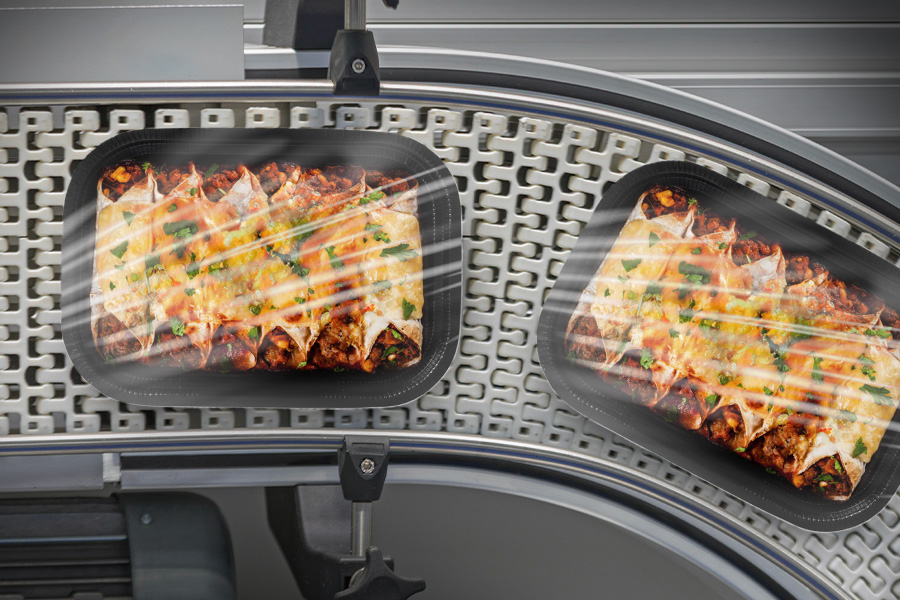
A frozen food brand encountered a roadblock trying to secure a coveted placement for their Mexican bowl in a popular nationwide retailer: the product was packaged in a plastic tray.
Switching to a more sustainable packaging like pressed paperboard might seem like a complex transition. However, the frozen food brand worked with PaperTech, who used a consultative approach to their color and film, and created a pressed paperboard tray that landed them that spot in the popular retailer.
Most importantly, the paper trays fit seamlessly into their existing production line. By integrating dual-ovenable paper trays into their processing lines, they turned a potential setback into expanded market reach and sales that surpassed expectations.
Here’s what their success can teach you.
When packaging fails to perform on the production line, whether due to jamming, misfeeds or other disruptions, the consequences are immediate and costly:
For frozen food processors considering a switch to sustainable packaging, the cost of inefficiency may cause hesitation. The good news is that durable pressed paperboard trays can be engineered to withstand the rigors of processing lines without compromising performance.
Backed by over 25 years of engineering expertise, PaperTech pressed paperboard trays are designed to handle the same demanding conditions, while offering added advantages:
These features mean processors don’t have to sacrifice line performance for sustainability.
Packaging isn’t just about making it through the line. It’s about protecting the product until it reaches the shopper. PaperTech paper trays are designed to handle the rigors of the entire frozen food journey:
For consumers, secure seals and strong trays translate to confidence in the product. With 74% of shoppers judging quality based on packaging, that trust directly impacts repeat sales.
Packaging plays a central role in brand identity, and dual-ovenable pressed paper trays can increase efficiency and branding opportunities of frozen food products. With PaperTech’s print-on-tray capabilities, frozen food processors can take advantage of:
For processors, print-on-tray capability isn’t just about aesthetics. By removing labeling steps, in-line efficiency improves, while material and labor costs could be reduced.
Relying on overseas plastics or imported trays leaves processors vulnerable to shipping delays, customs holds and raw material volatility. However, when packaging is sourced closer to home, processors gain confidence that their production lines won’t be slowed by supply issues.
A domestic paper tray supplier brings critical advantages to frozen food processors:
If you want to learn more about the trends impacting the frozen food market and what you can do to prepare proactively, here’s an educational resource: A Guide to Sustainable Paper Trays for Frozen Foods.
Transitioning to paper trays is more than a packaging change. It’s a business move. Our team specializes in helping frozen food brands transition smoothly and confidently. Reach out today and we’ll connect with you quickly to answer your questions.
